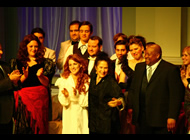
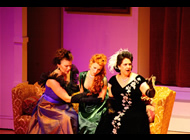
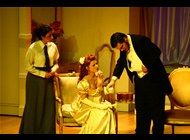
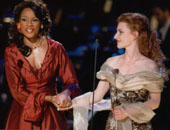
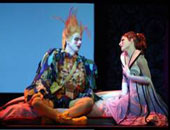
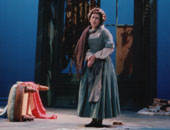
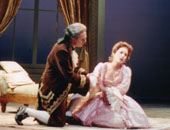
"... The standout in the cast was Jessica Stecklein in the title role. Her voice may someday be even richer and deeper, but its quality was virtually ideal for Violetta. "Sempre Libera" fluttered effortlessly, and her outbursts in the third act somehow encompassed the dying consumptive while still singing full out. With her lissome build, she was physically believable as well..."
Full Story >>
Robert Battey
La Traviata' from Opera International was well done overall
The Washington Post
July 25, 2011
"...fine singing of protagonists and choruses, good pacing and musical control, appealing staging and acting, and adequate sets, costumes and lighting. All these criteria were met by this fine production.
The part of courtesan Violetta Valery is the pivotal hub about which the other roles revolve. The flighty pleasure seeker must transform herself into a self-sacrificing, angelic martyr without invalidating the audiences suspension of disbelief. Jessica Stecklein's Violetta attained a remarkable authenticity, while avoiding melodramatic excess. She provided dignity, sincerity, and pathos to a role that when poorly acted can seem maudlin. Stecklein's singing was equally exceptional as she negotiated the more difficult coloratura runs with grace and ease. She is an experienced, consummate professional who lent the production the artistic luster it needed..."
Full Story >>
Robert Rollin
November 12, 2010 Youngstown, Ohio - Violetta in La Traviata
The Youngstown Vindicator
'La Traviata' Opera Western Reserve's leading lady brings experience to the role.
Guy D'Astolfo
The Youngstown Vindicator
November 12, 2010 Youngstown, Ohio
Getting Warmer . . .: Soprano Saves the Day..."Lucia di Lammermoor" and Jessica Swink's sensitively sung mad scene from the same opera was a crowd-pleaser... Click here for the full story
Ronni Reich,
The Washington Post
September 24, 2008
Opera International's "Operatic Vocal Gala"...the prize was the most outstanding dramatic presentation by coloratura soprano Jessica Swink who eased throughout her glorious scale runs in pure liquid form. She wowed the audience with her "Sempre libera" and her skill in this role qualifies her for the major opera companies in the world. She also performed beautifully in the duet in Act II. Bob Anthony AllArtsReview4U Opera International's focus at the Music Center at Strathmore...Swink's strong, ringing voice excelling in a highly emotional "Non sapete." Later Swink offered a mostly brilliant "Sempre libera" from Act I...
Mark Estren,
The Washington Post
August 7, 2007
"Jessica Swink, in the lyric soprano role of Pamina, ran off with the honors. Swink, a Washington native, is showing signs of turning into the capital city's greatest gift to opera since Denyce Graves. Her portrayal of Sister Blanche was one of the best things about Opera International's production of Poulenc's "Dialogues of the Carmelites" last summer, and she recently took the tiny role of Essy Baker in Scott Wheeler's "Democracy" and made it into something memorable. Her voice is fresh, firm and sweet; she is a deft, funny actress and her presence brightens the stage."
Tim Page,
The Washington Post
April 18, 2005